Xeroxed books
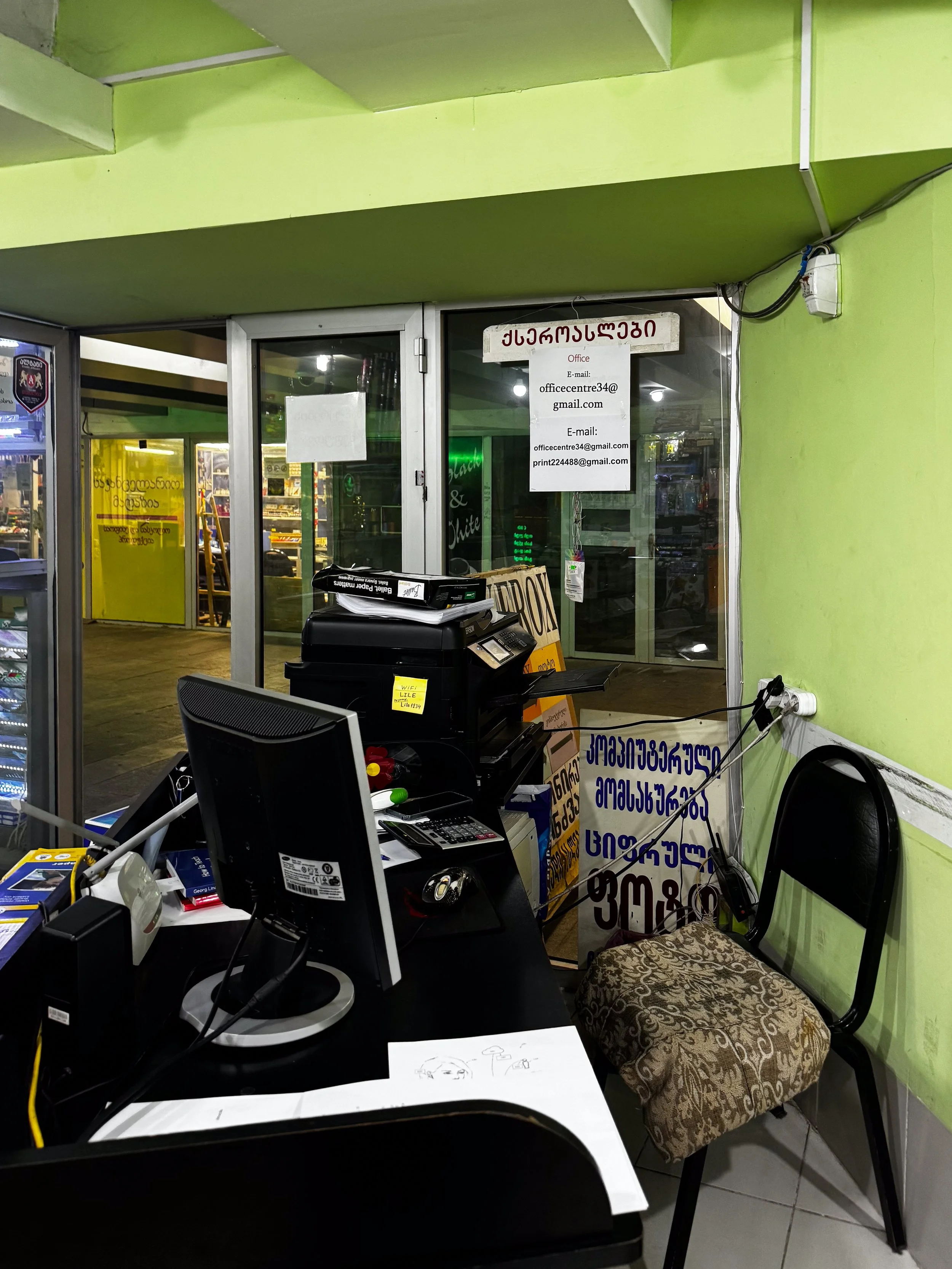
Tbilisi is a crazy city. And it’s a real city, busy, loud, and goes to sleep late at night, has a lot of movement within it. Growing up there, that was all I had known, so I did not have much to compare it to. Now that I have been to other cities, I appreciate how much of a city Tbilisi really is.
Xerox places can be found in any underpass. And there are a lot of underpasses in Tbilisi, because the traffic is crazy and the streets are busier with cars than people. In these underpasses, you can find counterfeit designer clothes, Orthodox Christian memorabilia, shoemakers, Toy stores, and most importantly for the story I am trying to tell, xerox machines.
As a teen, I loved Xeroxing things for a couple of tetri at the time. Especially if one of my friends had a cool magazine or a rare manga. Xerox it, put it in a plastic sleeve and make it a part of my collage in a binder. I guess it is hard to break a habit. Because although they are not as cheap in Europe, you don't find them sharing spaces wth orthodox incense and counterfeit designer clothes (which is a big part of the experience). I found myself xeroxing some photobook pages I have enjoyed, and I know I will keep xeroxing them, so I decided I would share these selections with you, too.
What I have Xeroxed lately:
Mostly from Japanese photobooks, lesser-known photos by well-known photographers seem to be the theme this month. When It comes to Xeroxing, I try to limit myself to only 2 pages per book. I print them single sided and take notes on the back of each page.
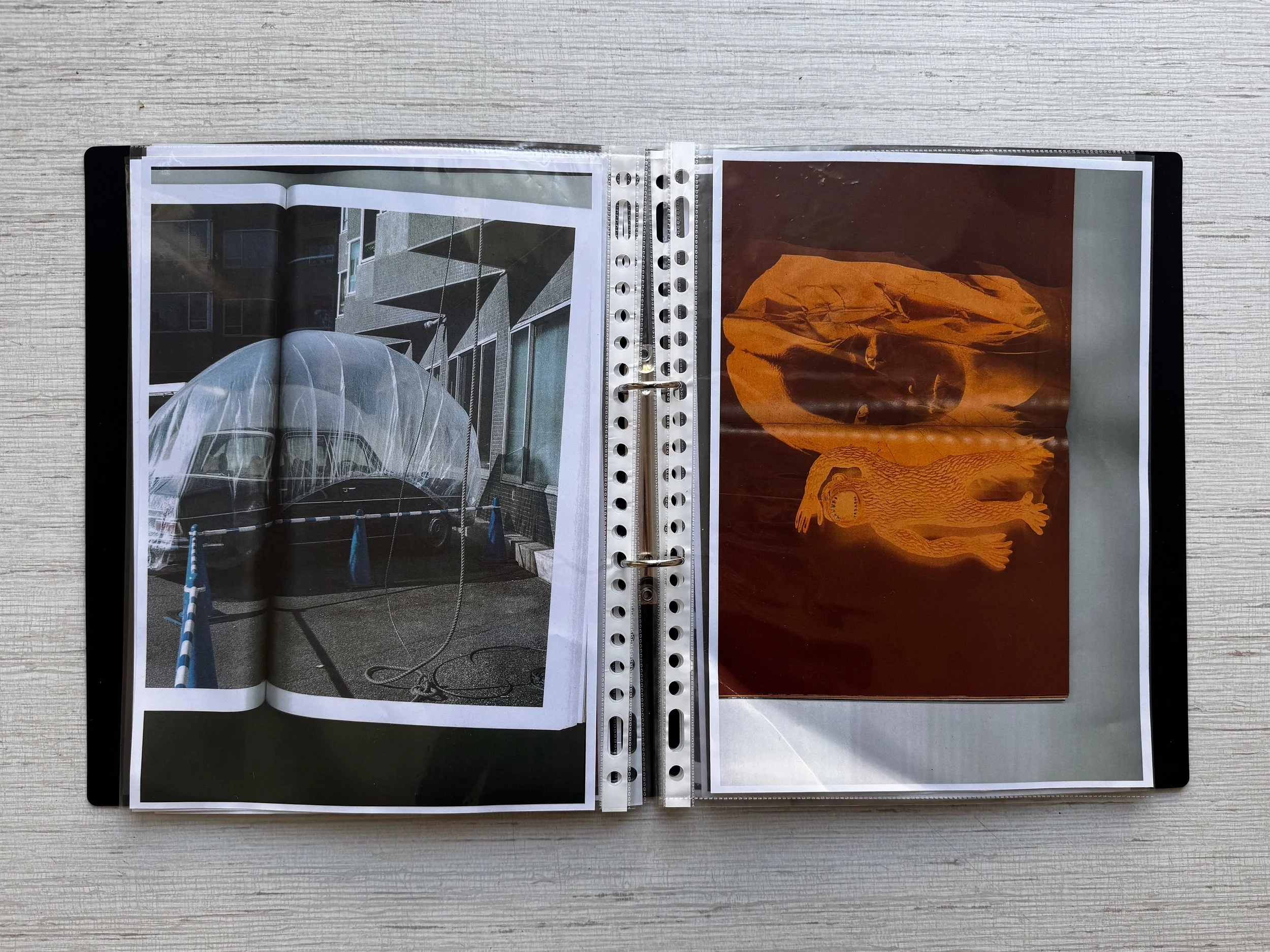
Left: “BTS” by Takashi Homma. Photographs of unnoticed rituals of protection and concealment that shape everyday life. Shot primarily in Tokyo.
I like coverings, especially when the material is see through. It has been something I have been trying to incorporate into my own work, with the use of plexiglass. This particular photograph excites me because how much volume and weight a puffed up sheet of plastic has in the composition of this image.
Right: “Negaeropolis Uganbochi” by Nobuyoshi Araki. Presented within this book are scenes of Tokyo alongside recurring motifs in Nobuyoshi Araki’s work: nudes, flowers, dolls, and urban scenes. Much of the series focuses on a cemetery within the city, captured in black and white using a lens the artist deliberately cracked to shape the images. The image that stood out to me is a negative-like inverted image. Although I am not sure whether this image is an actual negative or not, the portrait with a doll in this colors seemed unusual enough to catch my eye.
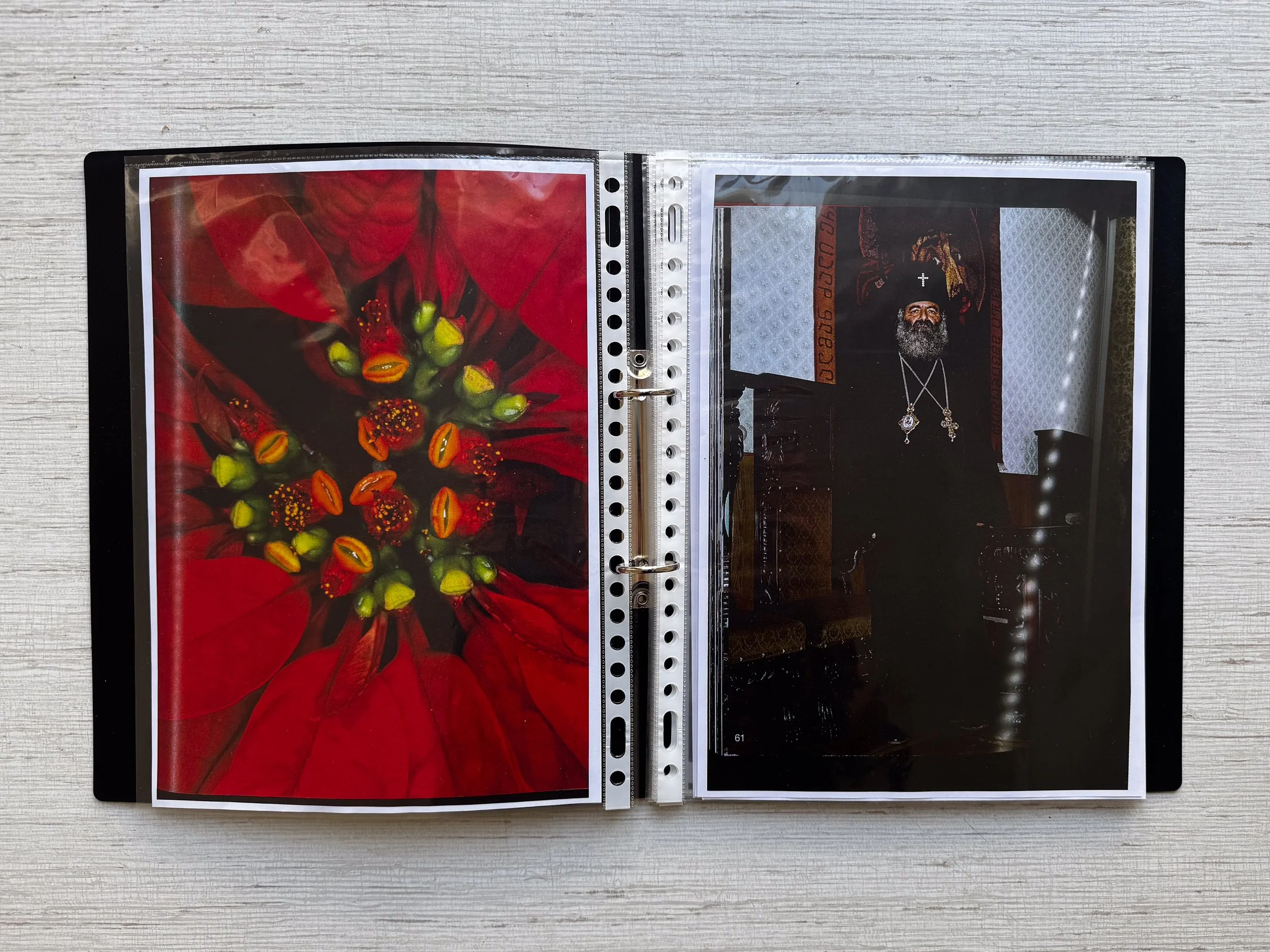
Left: Nobuyoshi Araki: Shijyo Tokyo - Marketplace of Emotions 1998. Combines colored photographs of flowers with distressed black-and-white images of life in Tokyo
Right: USSR 1991 Keizo Kitajima
In the fall of 1990, Keizo Kitajima received a commission from Japan’s Asahi Shimbun newspaper to visit the Soviet Union. In this photograph, you see a Georgian priest. The style of the photograph reminds me typical pictures from that time. It is something else to see that environment being captures by so brilliantly by Kitajima, in terms of composition, color, and moment.
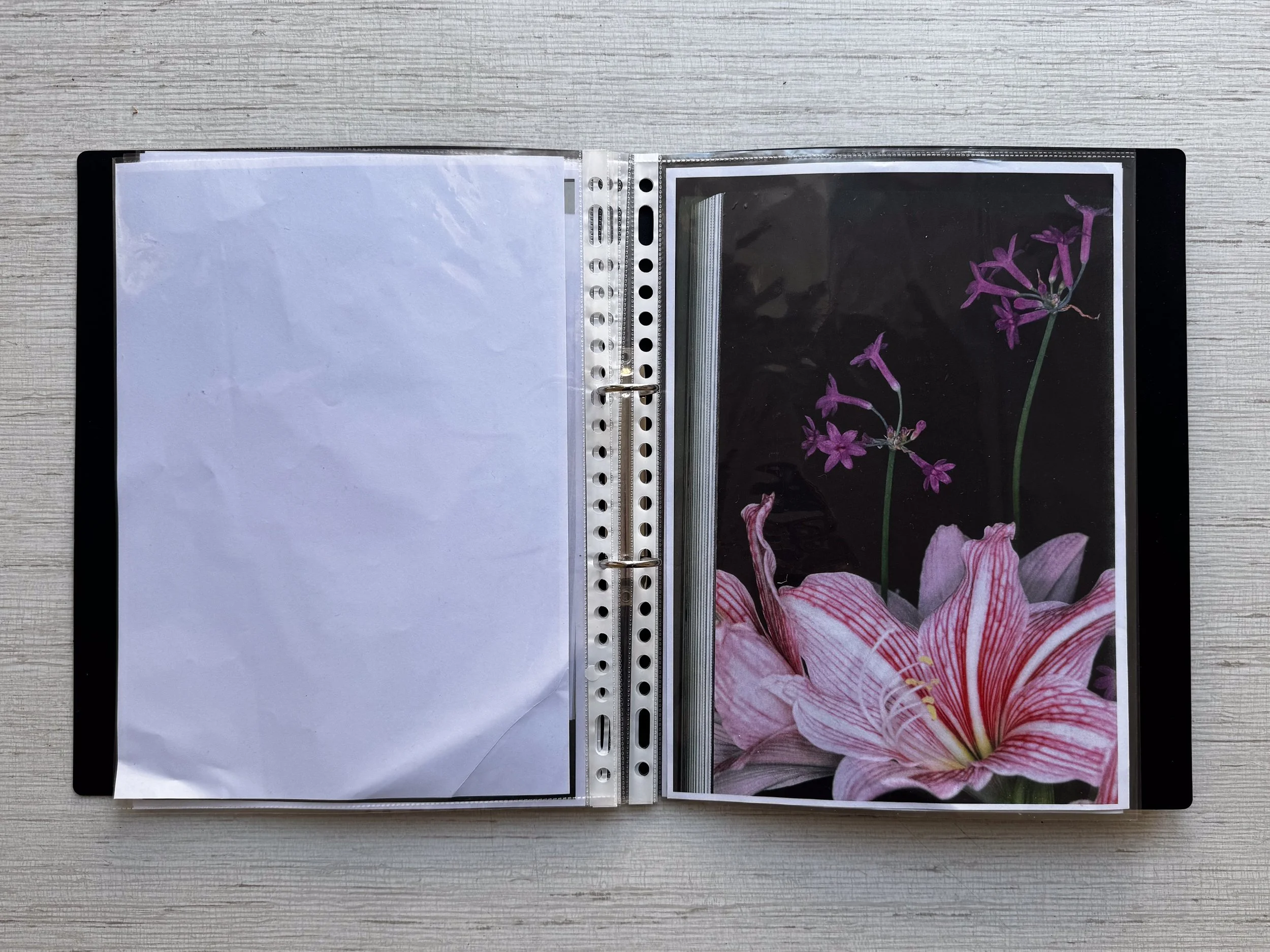
Nobuyoshi Araki: Shijyo Tokyo - Marketplace of Emotions 1998
Araki is quite well-known for his nude photographs and provocative, erotic nudes. I find the way he photographs nudes to be in the same vision as the way he photographs flowers, too.
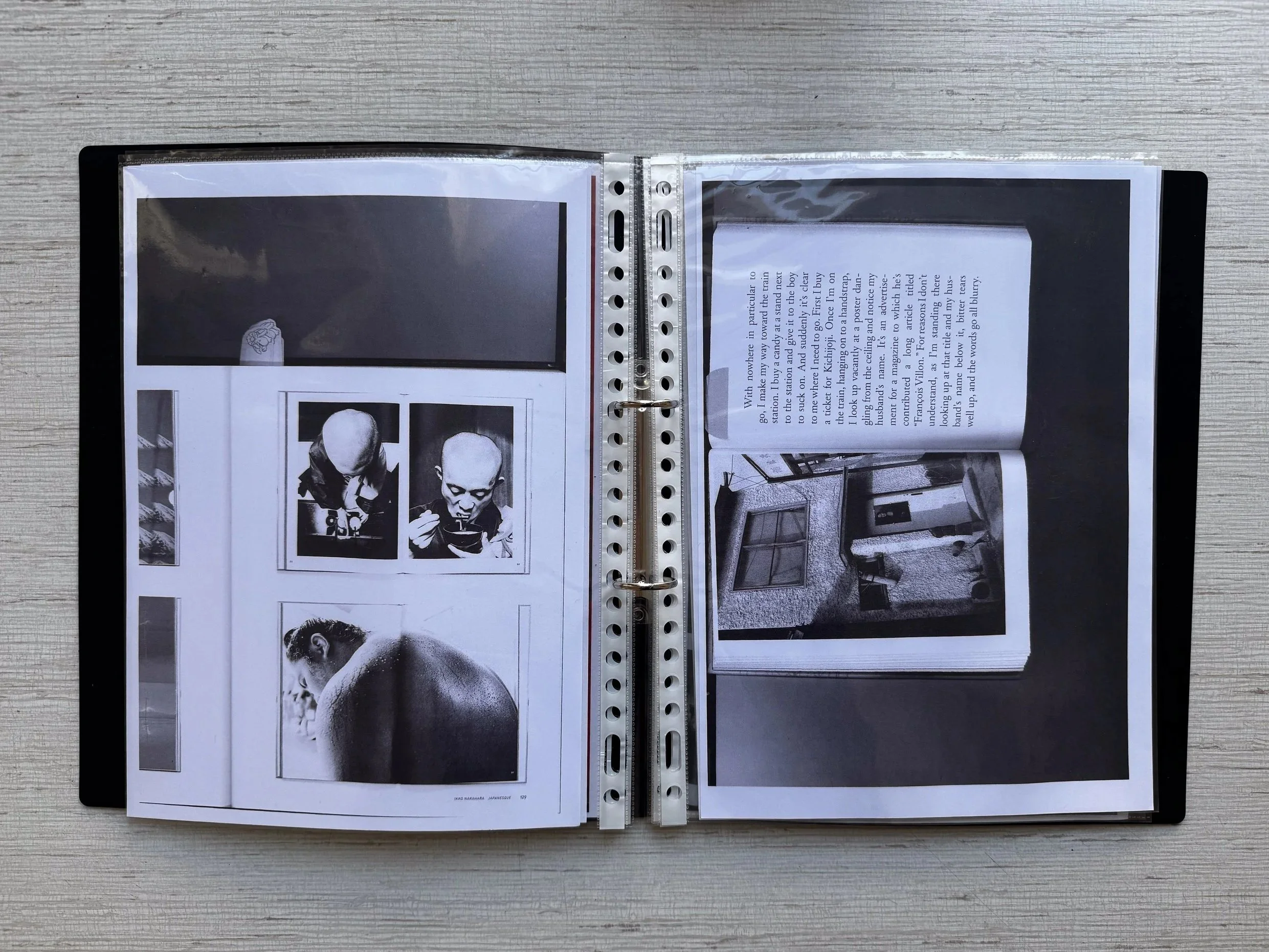
Left: Japanesque - Ikko Narahara. I xeroxed these images because I like how the human body is framed in relation to the perspective of the camera lens, which works really well with these black and white portraits.
RIght: Dazai - Daido Moriyama. 2014
Osamu Dazai is one of the most important literary figures in 20th century Japan. Dairo Moriyama needs no further introduction. I found this format for a photobook to be quite interessting, as it features Osamu Dazai's 'Villon's Wife', originally published in 1947, and Moriyama made a selection of photos around this story. Sometimes, they take you out of the story, sometimes they draw you back in. This particular page, I selected because of the strangeness of an image of Mona Lisa, disorienting, just like the text accompanying it.
Most, if not all of these books were found on the shelves of Bibliotheek Sint-Lukas.